The European Super League (ESL) Made Football’s Power Struggle Go Public
It began with whispers of a breakaway. Then, later came the announcement that shook football for the first time in history. News of a completely new league. The one which was backed by Europe’s richest clubs and promised money and exclusivity. The European Super League (ESL) didn’t just challenge the old order; it exposed the tension between people, too.
For instance, the fans felt betrayed, governing bodies fought back, and owners defended their vision of the future. Suddenly, things that were once confined to boardrooms became a global show. This clash was not only about a league. It was also about control, loyalty, and the soul of the game. Hence, the debate was only just beginning.
Explaining How ESL Exposed the Game’s Fault Lines
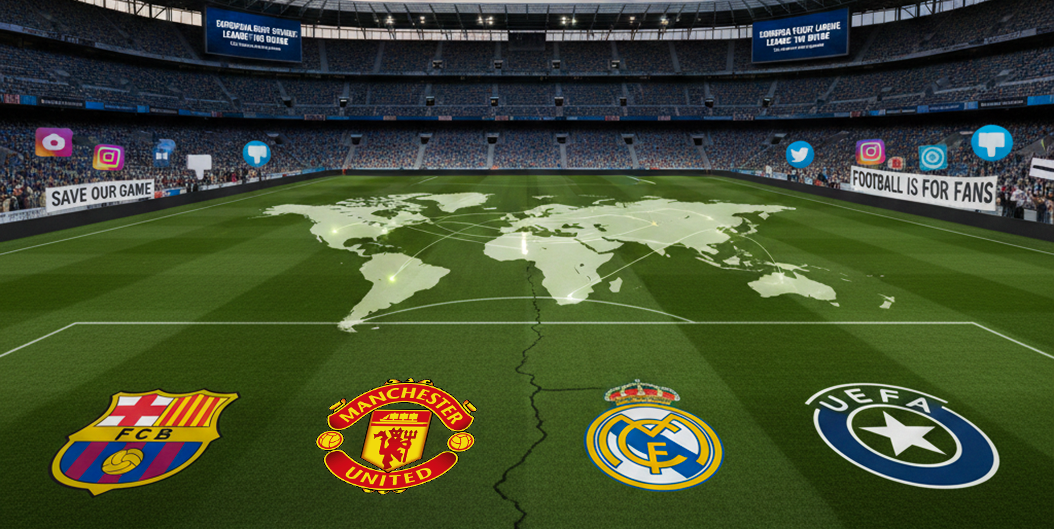
This clash between the clubs, the governing bodies, and the fans raised bigger questions about who really owns the game and where it goes next.
‘Was football still a sport shaped by its supporters, or had it become an industry driven by boardroom decisions and global markets?’
The European Super League made those tensions impossible to ignore. So, if you are trying to understand what really goes on behind modern football, the ESL story is the best place to start.
There are rumours that the league created new problems, and those who haven’t read enough about football history end up buying it. The truth is that it only brought long-standing problems into the spotlight. Here is a hint. For years:
- Big clubs felt they were generating most of the money but not getting enough control.
- UEFA wanted to keep authority over European competitions.
- Fans wanted the game to stay fair, open, and connected to tradition.
However, when the ESL was announced, all these groups suddenly clashed in public. It became clear that everyone had very different visions of what football should be.
The Big Pictures of How All This Began
The tension didn’t start in 2021. It had been building for decades. As football became wealthier, a small group of elite clubs grew far more powerful than the rest. They attracted bigger audiences, earned more sponsorships, and henceforth, expected more influence.
But they still had to follow UEFA’s rules and share revenue through existing competitions like the Champions League. So, as time passed by, these clubs felt that the system limited their growth. They were eager for a guaranteed, predictable income. They also wanted permanent European participation and direct control over major decisions.
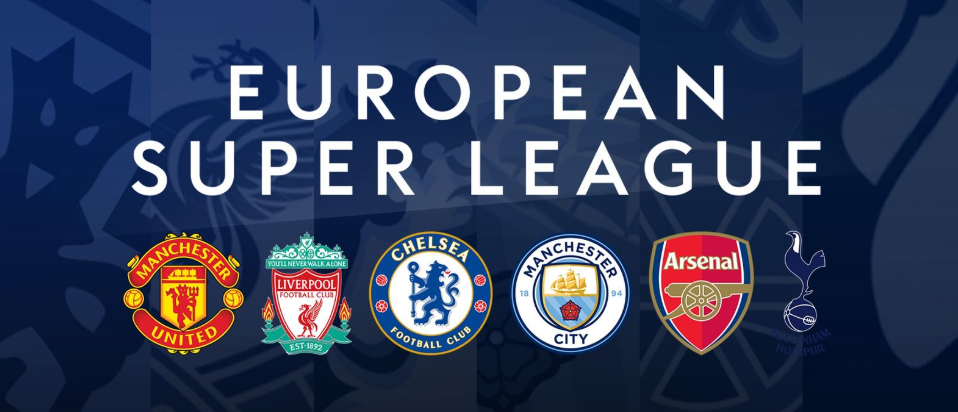
Only this time, the quiet talks about a breakaway league left the boardroom. The ESL announcement was indeed the moment when these private frustrations went public, and the world finally saw the scale of the divide.
4 Things That Rich Clubs Wanted from UEFA
The big clubs were not just chasing money. Instead, they were demanding four clear changes.
- They wanted a fixed income every season and not a performance-based qualification.
- They asked for a bigger share of EU revenues in return for attracting a global audience.
- A greater control in decisions about competition formats and commercial rights.
- They wanted to play major matches regularly, without the fear of missing out on the Champions League.
These demands showed how differently elite clubs viewed the future of football. They saw themselves as global brands, not just teams. And when UEFA didn’t agree to all of this, they chose the boldest option: creating their own league.
UEFA’s Grip on the Champions League was Challenged
Here is another truth for you. So, as you know that the Champions League is UEFA’s strongest asset, financially and politically. It is apparent that this gives UEFA huge influence. After all, the world’s best clubs rely on it for exposure and revenue.
Though when the ESL appeared, it directly threatened this power. This was bad news. If the biggest teams left too, the Champions League would lose its star players, global audiences, and commercial value. In short, everything. This is the reason why UEFA reacted immediately to it.
They understood that not just a competition, but their position at the top of European football governance was at stake. Their quick response is proof of how much the ESL challenged the old structure. It was the first time in years that UEFA had to defend its control openly, proving that the Champions League sits at the heart of the entire power struggle.
Fans Became the Strongest Force in the Debate
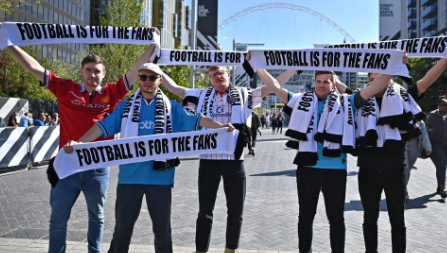
What surprised the world most was the strength of the fan reaction. Diehard supporters from England, Spain, Italy, and beyond united almost overnight. And they just did not gather to talk. They protested big time. Sometimes outside stadiums, sometimes they would flood the social media, asking for only one thing: ‘The clubs should withdraw’.
For years, fans had felt ignored as decisions were made for financial reasons, not sporting ones. But during the ESL moment, their voices finally mattered. Even the politicians reacted. Eventually, the club owners felt pressured to reverse their decisions. In the end, the ESL collapse proved something important:
‘When fans act together, they can still influence the direction of the game.’
What Threats OR Benefits Could ESL Have Enforced
The European Super League came with a mix of potential benefits and serious risks. Supporters of the idea believed that the idea could:
- Create bigger matches more often
- Guarantee financial stability for elite clubs
- Modernise European football
But the threats were far greater. A closed league would have destroyed merit-based competition, leaving smaller clubs with little hope of rising.
- The traditional domestic leagues would have lost meaning
- The young players might miss out on opportunities
- Overall competitive balance, which was already fragile, could collapse even further.
So, of course, the announcement highlighted a real issue, but its solution risked breaking the sport even more. This means perhaps it was better this way.
The Power Struggle Isn’t Over Though!
Even though it collapsed within 72 hours, the issues behind it never disappeared. Yes, the big clubs still want more control. The UEFA is still protecting its position, and money continues to shape decisions at every level of your favourite sport.
In addition, the UEFA’s new Champions League format, which is to start soon, quietly includes ideas similar to the European Super League. It is aimed to give more guaranteed games and more revenue for the biggest clubs. This shows how the fight is on.
However, this time in a different form. This is also a silent hint for football fans to continue paying attention because the balance of power in the game is shifting slowly yet again.
The Saga Reminds Fans to Look Deeper
The bottom line is that when it was about fairness and the bright future of Football, all the fans united overnight to stand for it. This shows how much everyone loves the game and will continue to protect it in the future.
Also, it is a lesson for the rest of the world that this sport is run by the fans. They can protest for it, create banners, and express their anger about it in every way possible. Though this is not the only event in Football history that is worth reading about. Everything you see today in the sport is here because of at least one past incident you should know about.